From guesswork to a real feeding plan.
Discover what your horse really needs based on work, body, forage, concentrate and goal. No standard advice. No guesswork. Just clarity.
You enter what your horse gets.
Forage, concentrate, balancer and supplements — everything your horse gets daily. Amounts where you know them, estimates where you do not yet. We always start with what is already there.
No account to create. No link to your barn. No app to maintain daily.
Source: CVB (2016), Feed Tables for Horses — feed database used for standard compositions.
HorseShake adds up the sources.
For each nutrient we calculate the total — based on label data, CVB values and your input. Forage, concentrate, balancer and supplements together. Not separately.
That is the step most owners do not take themselves. Not because they do not want to — but because it is very time-consuming without the right sources and tables.
Method: summation per nutrient across all feed sources, per the calculation methodology in NRC (2007), chapter 16 (Diet Formulation).
Intake against reference values.
For each nutrient you see: how much your horse gets, what the reference value is (NRC 2007 / CVB), which source we use and whether there is possible overlap.
Reference values: NRC (2007) Nutrient Requirements of Horses, 6th rev. ed., ch. 6–8 (minerals, vitamins, energy).
We show how sure we are.
Not every result is equally hard. We do not hide that. The more you fill in and the better your forage is known, the higher the confidence.
Unknown is not the same as deficient. We show uncertainty as uncertainty — so you know exactly how much weight to put on a result.
Confidence methodology based on data-source quality — comparable to GRADE-like certainty levels from evidence-based veterinary medicine, applied here to nutrition data.
You choose how far you want to go.
Quickscan gives a first impression — free, within a few minutes. DeepScan calculates everything, including your forage analysis. The Feeding schedule translates the analysis into a daily plan at the barn.
No automated report as a hard promise. Paid analyses go through a manual review before delivery.
On a red flag: no automated advice.
For medication, EMS, laminitis, colic, acute complaints or clinical doubt we refer you to your vet. HorseShake is not a veterinary service and gives no treatment advice.
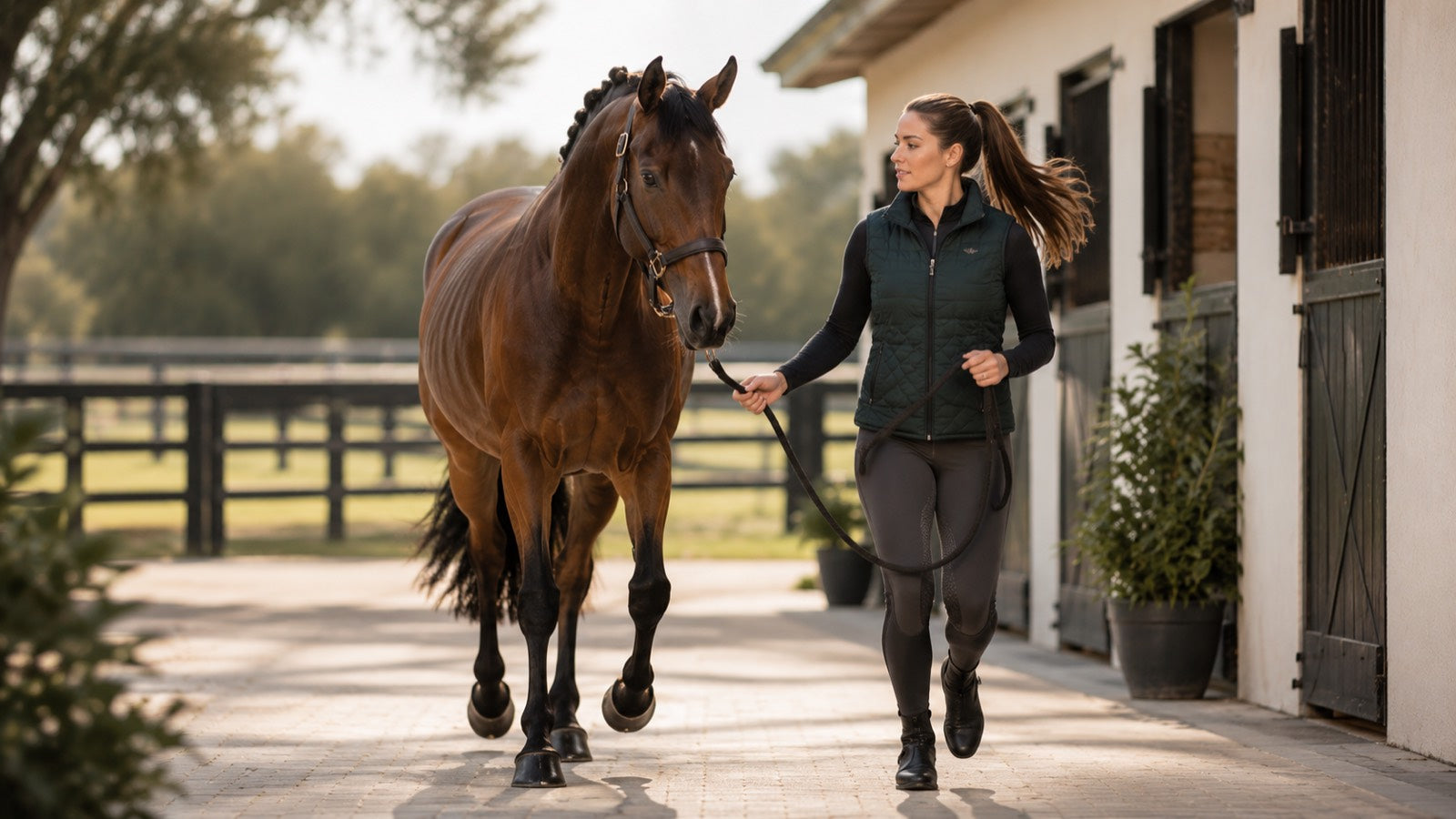

Your horse can't wait. Can you?
Free, in three minutes, no account. See what stands out in your ration.
Check my horse now — freeNo account · no payment · indicative · not a diagnosis · not medical advice
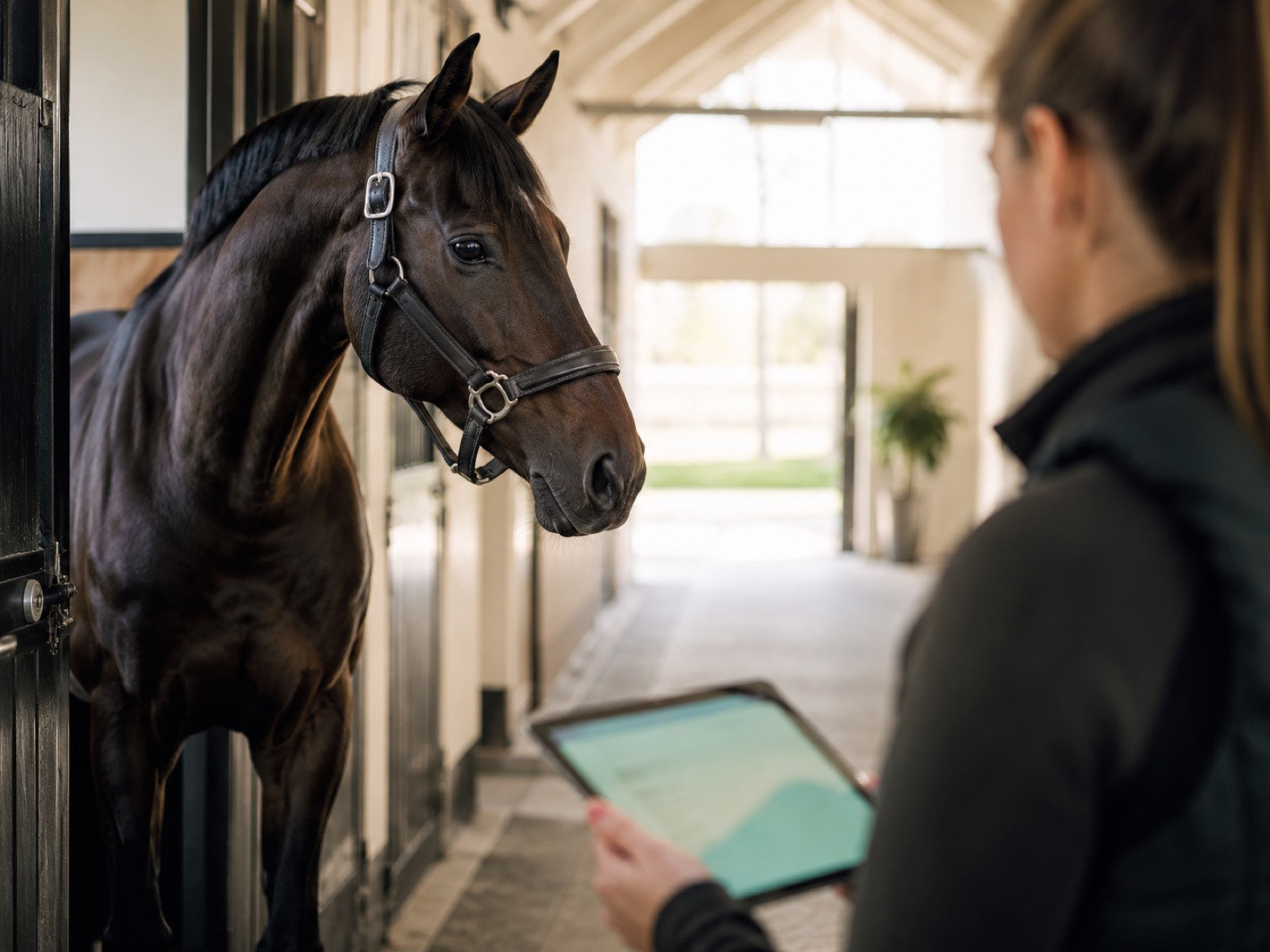
"I wanted one thing: to see what my horse really gets, without first having to buy a tub. That is why HorseShake works this way."